Why Shouldn’t I Just Wait Until Age 12 for Braces?
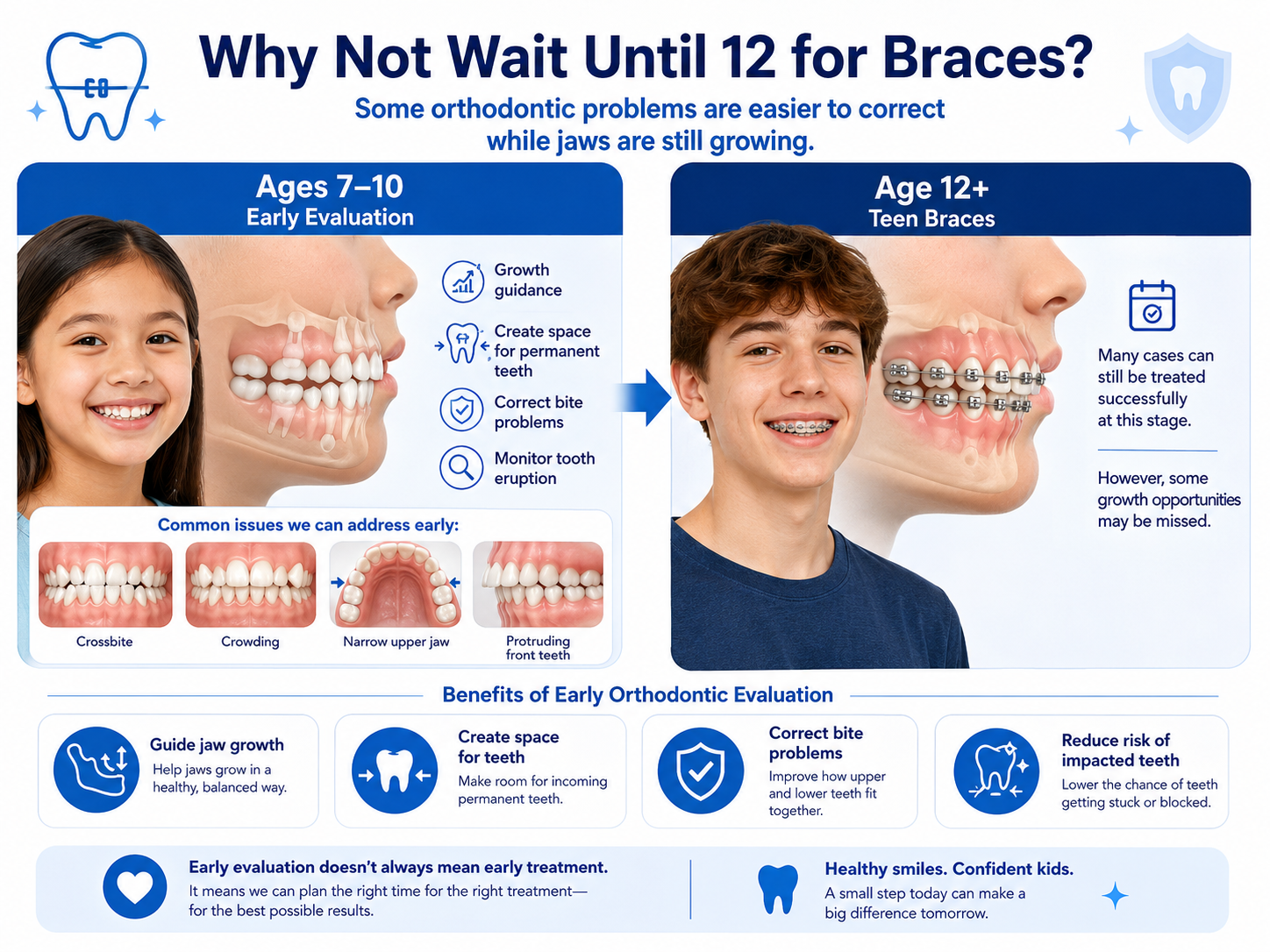
Why Shouldn’t I Just Wait Until Age 12 for Braces?
Many parents wonder why their child may need an orthodontic evaluation before age 12. It is a common question: “Why not just wait until all the permanent teeth come in and start braces then?”
For some children, waiting until the teenage years is perfectly fine. Not every child needs early orthodontic treatment. However, for others, waiting too long can mean missing an important growth opportunity.
Orthodontic timing is not based only on a child’s age. It depends on dental development, jaw growth, bite relationship, crowding, facial balance, and the specific orthodontic problem being treated.
Why Age 12 Is Not Always the Right Starting Point
By age 12, many permanent teeth have erupted, and this is often when full braces may begin. However, some jaw and bite problems start much earlier. If those problems are left untreated, they may become harder to correct later.
While a child is still growing, orthodontic treatment can sometimes help guide jaw development, create space for permanent teeth, improve bite function, and reduce the risk of more complicated treatment in the future.
Once certain growth stages have passed, some problems may require longer treatment, extractions, surgical correction, or more complex orthodontic care.
The Difference Between an Evaluation and Treatment
An early orthodontic evaluation does not mean your child automatically needs braces.
In many cases, the best recommendation may be to simply monitor growth and development over time. The purpose of an early visit is to identify whether a problem is developing and decide whether treatment should begin now or later.
Some children benefit from early treatment, also called Phase 1 orthodontics. Others are better treated during adolescence. The key is knowing the difference.
What Problems May Need Earlier Orthodontic Care?
Certain orthodontic problems are often easier to address before age 12, while the jaws are still developing.
Early treatment may be recommended for:
- Crossbites
- Severe crowding
- Narrow upper jaw
- Ectopic eruption of permanent teeth
- Impacted teeth
- Significant overjet
- Underbite or Class III growth tendencies
- Severe open bite
- Harmful oral habits
- Bite shifts caused by jaw imbalance
- Early signs of jaw growth problems
These issues can affect how the teeth come in, how the jaws grow, and how the bite develops. Treating them early may help create a more stable foundation for future orthodontic care.
How Growth Can Help Orthodontic Treatment
Children’s jaws are still developing, which gives the orthodontist an opportunity to guide growth in a more favorable direction.
For example, if the upper jaw is too narrow, a palatal expander may be used at the right age to help widen the arch. This can create more room for permanent teeth, improve the bite, and support healthier jaw development.
If we wait until growth is more complete, the same correction may become more difficult. The treatment options may also become more limited.
A Simple Way to Explain It to a Child
For a younger child, we might explain it this way:
“Your teeth and jaws are growing right now. Sometimes we can use that growth to help fix a problem more easily. If we wait until you are older, some of that growing may already be finished, and the problem may be harder to correct.”
This helps children understand that early orthodontic care is not about rushing into braces. It is about using growth at the right time.
Does Every Child Need Braces Before Age 12?
No. Many children do not need early braces or appliances.
Some children only need observation until more permanent teeth come in. Others may be ready for full braces around age 12 or later. The right timing depends on the child’s dental age, skeletal development, and type of malocclusion.
That is why an orthodontic exam is so important. It allows the dentist or orthodontist to determine whether early treatment is needed or whether waiting is the better option.
Why Early Orthodontic Screening Matters
The American Association of Orthodontists recommends that children have their first orthodontic check-up no later than age 7. At this age, children usually have a mix of baby teeth and permanent teeth, which allows early bite and jaw development issues to be identified.
Again, this does not mean every 7-year-old needs treatment. It means the dental team can monitor growth, detect problems early, and recommend treatment only when it is truly beneficial.
The Goal Is Better Timing, Not Earlier Braces for Everyone
At Ortega Dental Care, our goal is to recommend orthodontic treatment at the right time for each child. Sometimes that means early intervention. Sometimes that means waiting and monitoring.
The most important thing is not the child’s exact age. It is whether the teeth, jaws, and bite are developing in a healthy direction.
Schedule an Orthodontic Evaluation
If your child has crowding, a crossbite, a narrow upper jaw, an underbite, protruding front teeth, or teeth that are not coming in properly, an orthodontic evaluation can help determine the best time to begin treatment.
Waiting until age 12 may be fine for some children, but for others, earlier care can make a substantial difference.