Why Bone Grafting May Be Needed Before a Dental Implant
Why Bone Grafting May Be Needed Before a Dental Implant
Dental implants are one of the most reliable ways to replace missing teeth, but they need a strong foundation to work properly. Just like a house needs a solid base, a dental implant needs enough healthy jawbone to stay secure.
When a tooth has been missing for a while, the bone in that area can begin to shrink. This is a very common and natural process. In some cases, the jawbone may become too thin, too short, or too weak to fully support an implant right away.
That is where bone grafting may help.
What Is Dental Bone Grafting?
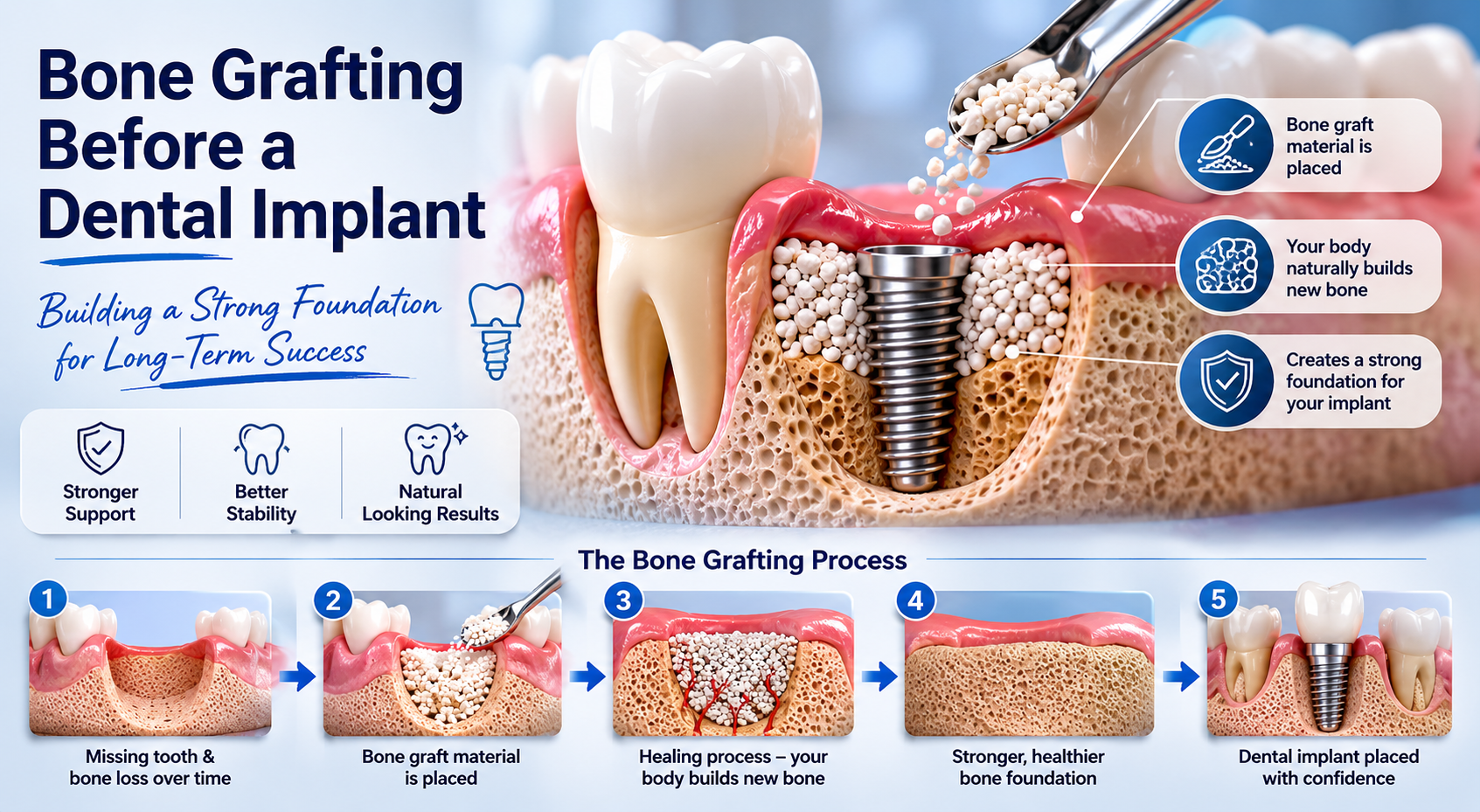
Dental bone grafting is a routine procedure used to rebuild or strengthen the jawbone before placing a dental implant. During the procedure, bone grafting material is added to the area where more support is needed.
Over time, your body naturally heals around the grafting material and begins to create a stronger foundation. This process can help provide better support for a future implant and improve the long-term stability of your treatment.
A dental implant acts like an artificial tooth root. It is placed into the jawbone, where it needs to become stable and secure. If there is not enough bone, the implant may not have the support it needs.
Bone grafting may be recommended to:
- Rebuild bone lost after tooth removal
- Strengthen the implant site
- Improve implant stability
- Support a more natural-looking final tooth
- Help create a healthier foundation for long-term success
Why Does Jawbone Shrink After Tooth Loss?
Your jawbone needs stimulation from tooth roots to maintain its strength and shape. When a tooth is removed or missing, that area no longer receives the same stimulation. As a result, the bone can slowly deteriorate or become thinner over time.
This does not mean you did anything wrong. Bone loss after tooth loss is very common. The important thing is identifying it early and creating a treatment plan that gives the implant the best possible support.
Is Bone Grafting a Common Procedure?
Yes. Bone grafting is commonly performed before or during dental implant treatment. Many patients need some level of bone support before an implant can be placed safely and predictably.
For some patients, the graft can be completed at the same time as
tooth removal or implant placement. For others, the graft needs time to heal before the implant can be placed. Your dentist will evaluate your bone, gum tissue, and overall oral health to determine the best approach.
How Long Does Bone Grafting Take to Heal?
Healing time can vary depending on the size of the graft, the location, and the patient’s overall health. In many cases, the grafted area needs a few months to heal and strengthen before the implant is placed.
This waiting period is important because it allows the area to develop a more stable foundation. Although it may add time to the treatment process, it can significantly improve the prospect of implant success.
Does Every Dental Implant Need Bone Grafting?
No. Not every patient needs a bone graft before receiving a dental implant. Some patients already have enough healthy bone to support an implant. Others may need grafting because the bone has become too thin or sparse.
A dental exam, X-rays, or a
3D scan can help determine whether bone grafting is necessary.
Building the Right Foundation for Your Implant
At Ortega Dental Care, our goal is to make dental implant treatment as safe, stable, and predictable as possible. If bone grafting is recommended, it is because your implant needs a stronger foundation to function properly and look natural.
Bone grafting is not an extra step without purpose. It is often an important part of creating a healthier, more reliable result.
If you are missing a tooth or have been told you may need a dental implant, we can evaluate your jawbone and explain your options clearly. A proper foundation can make a substantial difference in the long-term success of your dental implant treatment.