Why Bone Regeneration Is Essential for the Success of Dental Implants
Why Bone Regeneration Is Essential for the Success of Dental Implants
When patients lose a tooth, most people focus only on the missing tooth itself. However, what many people do not realize is that the jawbone underneath also begins to deteriorate almost immediately after tooth loss. Bone regeneration plays a critical role in preserving the foundation needed for long-lasting dental implants and overall oral health.
At Ortega Dental Care in San Juan Capistrano, we carefully evaluate the quality and volume of bone before placing dental implants because healthy bone is essential for implant stability and long-term success.
What Happens After Tooth Loss?
Your jawbone is living tissue that depends on stimulation from your teeth to remain strong and healthy. Every time you chew, the roots of your teeth stimulate the surrounding bone and help sustain its density and shape.
Once a tooth is lost or extracted, that stimulation disappears. As a result, the body begins to resorb the bone in that area. Over time, the jawbone can shrink both vertically and horizontally. In some cases, patients can lose a substantial amount of bone within the first year alone.
This process can:
- weaken the support needed for a dental implant
- affect neighboring teeth
- alter facial appearance
- create complications for future treatment
- make implant placement more difficult or even impossible without bone grafting
Bone loss can also accelerate aging around the mouth and jawline because the facial structure no longer has the same underlying support. In severe cases, patients may experience gum recession, shifting teeth, or instability in future restorations.
Why Bone Is Important for Dental Implants
Dental implants function like artificial tooth roots and must fuse directly with the jawbone through a process called osseointegration. Without adequate bone support, the implant may not properly integrate or withstand long-term chewing forces.
Strong bone support helps:
- stabilize the implant
- protect surrounding gum tissue
- maintain natural facial contours
- improve long-term implant success
- reduce the risk of implant failure
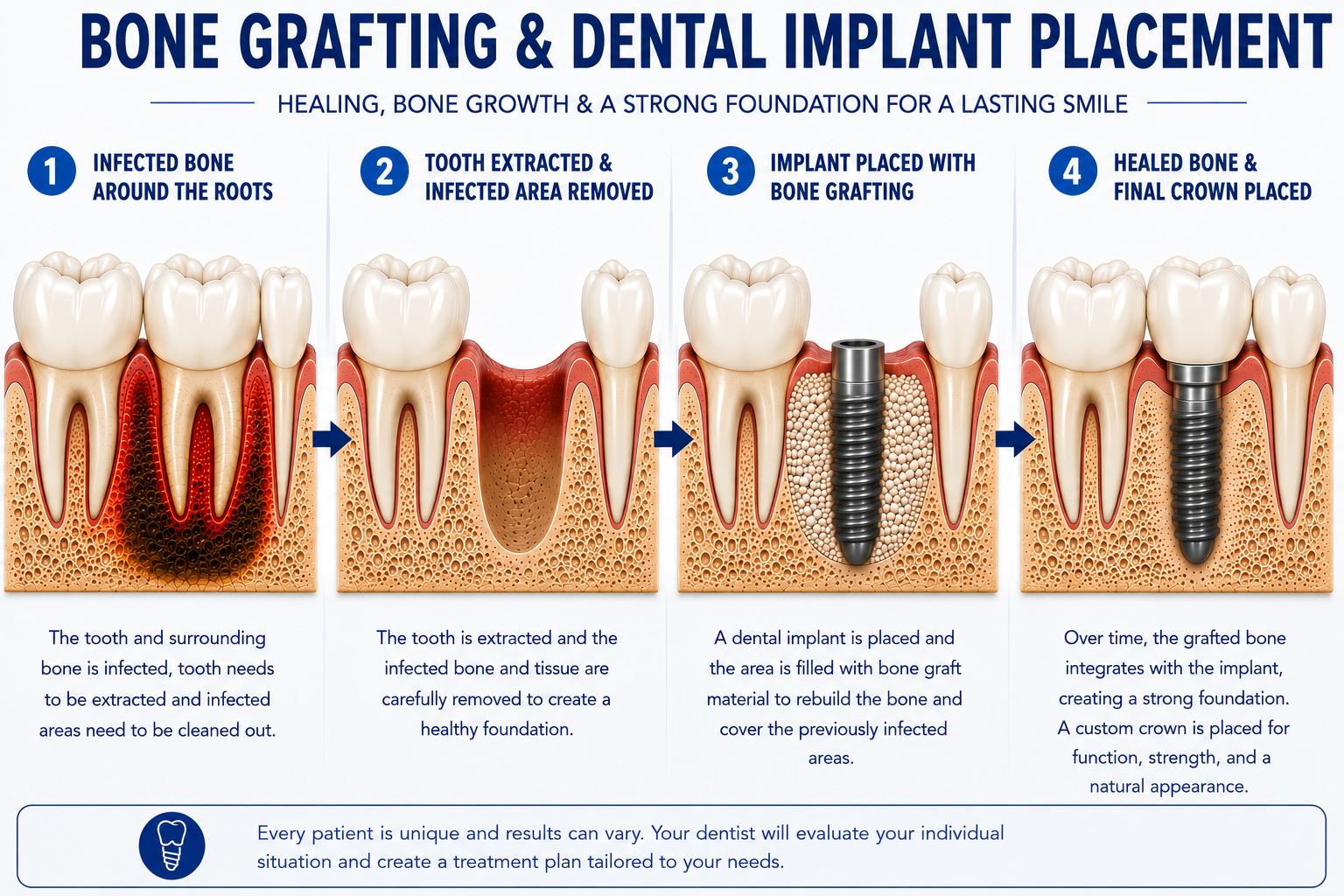
This is why bone regeneration and bone grafting procedures are often recommended either before or during implant placement.
What Is Guided Bone Regeneration?
Guided Bone Regeneration (GBR) is an advanced technique used to rebuild areas where bone has deteriorated. During the procedure, bone grafting material is placed in the deficient area and protected with specialized membranes that help guide the body’s natural healing process.
Over time, the body generates new bone around the grafted area, creating a stronger and more stable foundation for dental implants.
Modern bone regeneration techniques can help restore areas that previously may not have been suitable for implants and can significantly enhance both function and aesthetics.
The Consequences of Skipping Bone Grafting
Some patients delay or avoid bone grafting because they are unaware of how important the procedure is for long-term implant success. Unfortunately, insufficient bone support can compromise the stability and prognosis of dental implants over time.
Without proper bone support, patients may face:
- implant instability or failure
- gum recession around the implant
- compromised aesthetics in the smile zone
- difficulty chewing comfortably
- progressive jawbone deterioration
- more complex treatment needs in the future
Addressing bone loss early can help prevent more invasive procedures later and can substantially improve long-term outcomes.
Schedule a Dental Implant Consultation
Every patient’s bone structure and oral health condition is different. At Ortega Dental Care in San Juan Capistrano, we use advanced imaging and comprehensive evaluations to determine whether bone regeneration or guided bone regeneration may be beneficial before dental implant placement.
If you are considering dental implants or have been told you may not have enough bone for implants, our team can help evaluate your options and develop a treatment plan designed to restore both function and confidence.